
Your System Talks Before It Fails
Most AC and heating problems do not start as a full breakdown. They start as a small change that is easy to explain away, a faint smell, a bit more dust than usual, air that feels heavier than it should. Homeowners across Westside Los Angeles, from the beach adjacent blocks of Santa Monica and Venice to the warmer inland streets of Culver City and Mar Vista, tend to notice the same handful of signs before realizing their HVAC system is not just running inefficiently, it is actively working against the air quality inside the house. Here are five worth paying attention to, and why each one matters for more than just comfort.
Sign 1: A Musty Smell When the System Starts
If the air smells faintly musty for the first minute or two after your system kicks on, then seems to clear up, that is not your imagination and it is not nothing. That smell usually means moisture sitting somewhere in the system, a damp evaporator coil, a drain pan holding water it should not be holding, or condensation collecting in ductwork that runs through an unconditioned space. The smell fades because the moving air dilutes it, not because the source went away. In homes near the coast in Santa Monica and Venice, where the marine layer keeps humidity elevated much of the year, this is one of the more common calls we get, and it almost always traces back to moisture that needs attention rather than a filter that simply needs changing.
Sign 2: More Dust Than You Remember
If you are dusting surfaces more often than you used to, or noticing buildup on vents and registers that never used to collect much, that can point to a filter that is no longer doing its job, either because it needs changing or because air is finding a way around it instead of through it. A filter that does not sit flush in its slot, or a return grille with gaps around the edges, lets unfiltered air bypass the one part of your system designed to catch it. This is worth checking before assuming you simply need a better filter, since a better filter installed in a leaky frame does not solve the underlying problem.
Sign 3: Rooms That Feel Stuffier Than Others
If one room in the house consistently feels stale or heavy compared to the rest, even when the temperature reads the same, that usually points to an airflow problem specific to that room rather than the system as a whole. A collapsed or disconnected section of flexible duct, common in older Culver City and Mar Vista homes where ductwork has never been inspected, can starve one room of properly filtered, conditioned air while the rest of the house gets normal airflow. The room does not necessarily feel hot or cold, since some air is still reaching it, it just feels less fresh, because less of the air actually being filtered and circulated is making it there.
Sign 4: Visible Moisture or Water Stains Near Indoor Equipment
Some condensation collecting near an indoor unit is expected, that is simply the byproduct of pulling humidity out of your air. Actual standing water on the floor, or a discolored patch spreading across a ceiling below an attic mounted air handler, is a different problem entirely. Coastal blocks in Santa Monica and Pacific Palisades run into this more than most, since the marine layer keeps the evaporator coil producing condensate at a steady rate for much of the calendar year. Once a clogged drain line or a cracked pan gives that water nowhere to drain, even a modest amount of standing moisture indoors sets up conditions for mold right at the spot your air handler is pulling return air from, which is about the worst location for it to take hold.
Sign 5: Ice on the Lines or the Coil Itself
Frost or actual ice showing up anywhere on the refrigerant lines outside, or directly on the indoor coil, means shut the system off rather than let it keep running. Restricted airflow is almost always the root cause, a dirty filter, a blower motor on its way out, or return vents blocked by furniture or a rug pushed against them. An iced up system does not just risk the compressor, it also means whatever air is still making it through the house is a fraction of what the system should be moving, filtered or otherwise, while it strains through a cycle it cannot actually complete properly.
Why These Signs Show Up Differently Across the Westside
Which of these five you are more likely to run into has a lot to do with where in Westside Los Angeles your house actually sits. Closer to the water in Santa Monica and Venice, the recurring problems skew toward moisture, condensation, a drain line that clogs faster than it would inland, and the musty smell that tends to follow both. Push a few miles inland into Culver City or Mar Vista and the pattern shifts toward dust buildup and airflow complaints, driven by longer runtimes during inland heat and ductwork that has sat unresized and unsealed for years. Older housing stock scattered across the whole Westside, homes retrofitted for central air well after they were originally built, tends to show duct related airflow trouble regardless of which side of that coastal divide it happens to sit on.
How We Diagnose What Is Actually Happening
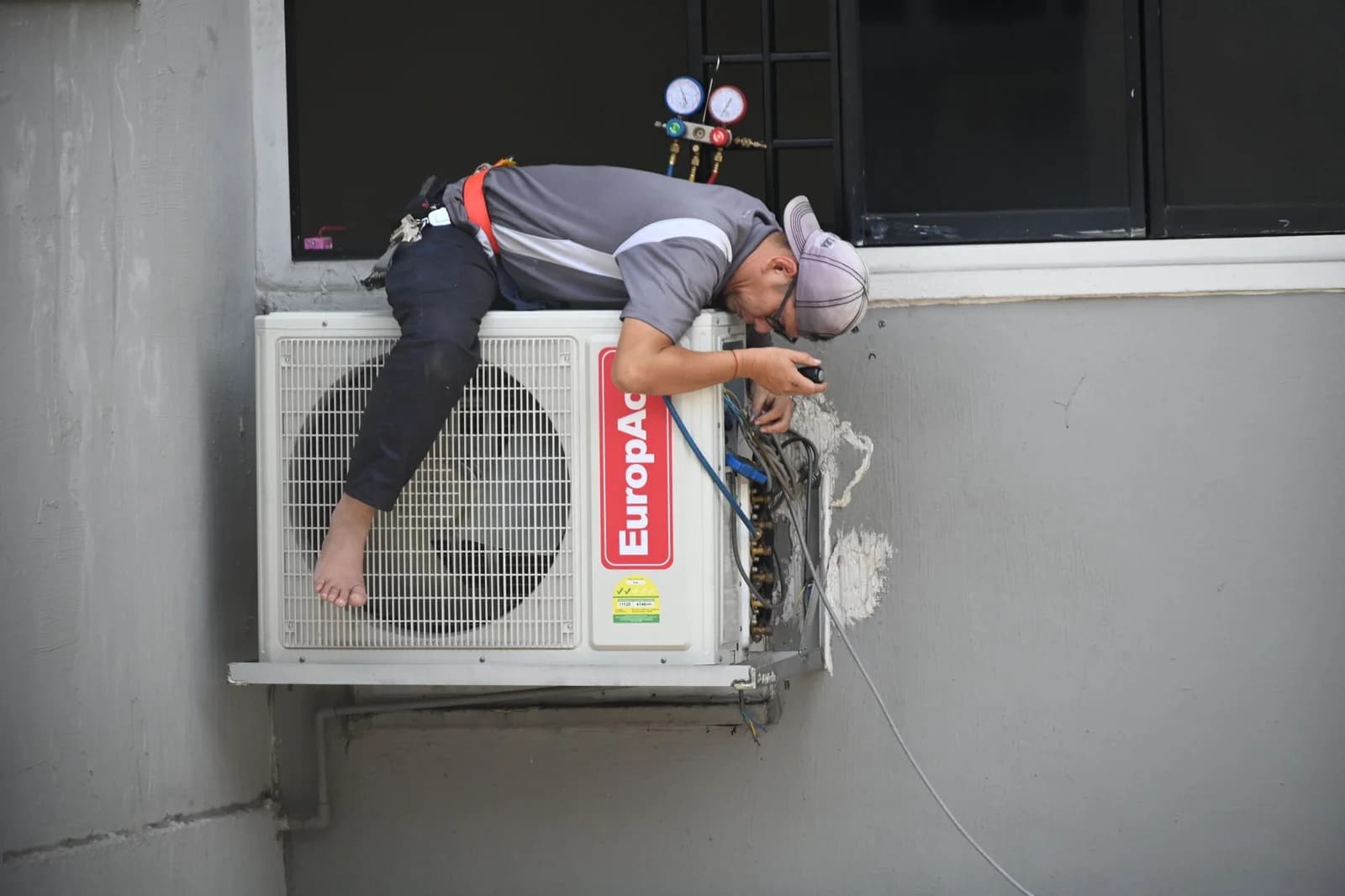
A service call starts with checking the symptom against actual readings, static pressure, airflow at the supply and return, and a visual inspection of the coil, drain pan, and accessible ductwork. Guessing at parts wastes your time and money, so we confirm what is actually happening before recommending a repair, and we explain the findings in plain language rather than handing you a parts list you cannot decode.
When It Is More Than a Repair Issue
Some of these signs point to something a repair alone will not fully solve. A musty smell that keeps returning after a coil cleaning may mean moisture is getting into the ductwork itself, not just the equipment, in which case a duct inspection matters as much as anything happening at the air handler. We will tell you honestly when the fix is a straightforward repair and when it is worth a closer look at what is happening inside the ducts themselves.
What Counts as Urgent
A faint musty smell or a slightly dustier room can usually wait for a scheduled visit. Standing water near an indoor unit, or ice that keeps reforming after you shut the system off and let it thaw, should not wait, since both point to problems that get worse the longer they continue. If you are not sure which category your situation falls into, describe what you are noticing when you call and we will tell you honestly whether it needs same-day attention.
Why Households With Allergies or Asthma Should Pay Closer Attention
If anyone in your household deals with allergies, asthma, or general sensitivity to dust and mold, these five signs deserve faster attention than they would in a household without those concerns. A musty smell that a healthy household might live with for a few weeks before calling can mean a meaningfully rougher stretch for someone whose airways react to mold spores or dust mites. We take that context into account when we talk through timing with you, since the right pace for addressing a sign like this is not the same for every household, even when the underlying mechanical problem looks identical on paper.
Keeping a Simple Log Helps More Than You Would Expect
If you notice one of these signs but it is not urgent enough to call same day, jot down when you noticed it and anything that seems to make it better or worse, whether a window was open, whether it was right after the system started a new cycle, whether it followed a stretch of marine layer mornings. That small bit of context helps our technician connect a symptom to a cause faster once we are on site, rather than starting from nothing when we walk in the door.
Do Not Wait for the Smell to Become a Bigger Problem
Noticing one or more of these five signs in your Culver City, Santa Monica, or Mar Vista home is worth a call rather than a wait and see approach, especially once a smell or a stuffy room has stuck around for more than a few days. Reach us at (877) 360-6719 and we will schedule a diagnostic visit, walk you through exactly what our technician finds on site, and explain what it means for the air moving through your house before we touch a single part.
Need Professional HVAC Service?
Our HVAC-experienced technicians are ready to help with all your AC and heating needs. Contact Westside AirCon Services today for expert service throughout the the Culver City Corridor service area.